
Your Fitness Watch isn’t your coach.

Fitness watches have been THE fitness equipment buzz of the past couple of years. Apple watches, Fitbits, Garmins etc. They tell your heart rate, your resting heart rate, how ‘ready’ you are for training, track your steps, and often give you sleep info.
Then on top of that, there are the variants designed to focus specifically on your sleep.
A lot of people have one of these now.
The problem is when, the stats take over. What started out as a way of helping and improving your productivity, hitting your movement goals and improving your sleep, ends up controlling your whole life. Rather than taking note of how your body actually feels when you wake up in the morning, you look straight at your watch and check out your sleep stats.

AI and tech are a wonderful thing, and it helps us all every day. But please, don’t let the numbers on a screen rule you.
I’ve been training for over 20 years, and a lesson I’ve always preached to my members and those that ask is, try getting into your workout first. If you don’t want to train for whatever reason, but you are scheduled to, at least, show up first. Get to the gym, or to your session, and start warming up. If you still feel crap once you get going, then I can respect that it might be time to rein it in for the session a little, or adjust your target numbers or goals for the day. But more often than not, not doing the workout costs you more, even if you don’t perform to the levels you want. We all have bad days, this is real life after all, but training when you really don’t know if you should can yield positive results - you’ve kept (and furthered) the habit, you’ve reinforced your tenacity and mindset, and most importantly, you’ve pushed beyond your comfort zone.
It is EASY to train when you feel great. 8 hours sleep, no traffic, body feeling good; frankly, you should have a great training session. It’s the days where you don’t feel a million percent that can give you the best results.
We live in a time when everything is instant gratification. Training is the one thing that isn’t - you can’t go from squatting 10 kgs to 100 kgs in one day. You can’t ‘will’ your body from running an 8 minute kilometre to a 4 minute one. That’s not physiology. So regardless of what your watch or fitness tracker says, no matter what your sleep score is telling you, the reward (and results) are on the other side of the workout. Don’t let your life, mental outlook and physical feelings be dictated to you by what a tiny electronic thing on your wrist says. Don’t outsource your own agency to an emotionless tool, which isn’t even perfectly accurate - these trackers all use proprietary software, they are not ‘medical grade’ tools (Fitbit say they are “not intended as medical devices”), and huge publications like Reuters have frequently reported on how they vary in measurement accuracy and quality. (Their reports go back as far as 2017!).
That being said, there are valuable things that you can use along with your own measures from your activity tracker - here are the three things I would actually pay attention to:
Step Count - A large 2025 review by Ding et al found big health gains up to “roughly 7,000 steps/day, with smaller incremental benefits beyond that for several outcomes.” And according to Reliability and Validity of Commercially Available Wearable Devices for Measuring Steps, Energy Expenditure, and Heart Rate: Systematic Review by Fuller et al. “In laboratory-based settings, Fitbit, Apple Watch, and Samsung appeared to measure steps accurately.”
When you look at your Heart Rate Variability or Readiness score, look at the TREND of the data and then think about external factors that have played a part - has your sleep been affected by something? Have you been eating later? Is stress at work higher? One reading is not really enough to give you a picture. - Without getting into the minutiae, Accuracy of Three Commercial Wearable Devices for Sleep Tracking in Healthy Adults by Robbins et al. made points in their conclusion around how the tests were done in a ‘regular’ sleep cycle and the ‘raw’ data is not made available (and therefore your results are displayed as per the software the device uses).
Training effort and fatigue. Taking a note of your training effort during sessions will help build your overall picture. Qualitative notes can be very useful. Was the equipment you were training on different to usual? Did you have to rush some things because it was busy. Did you do exercises in a different order?
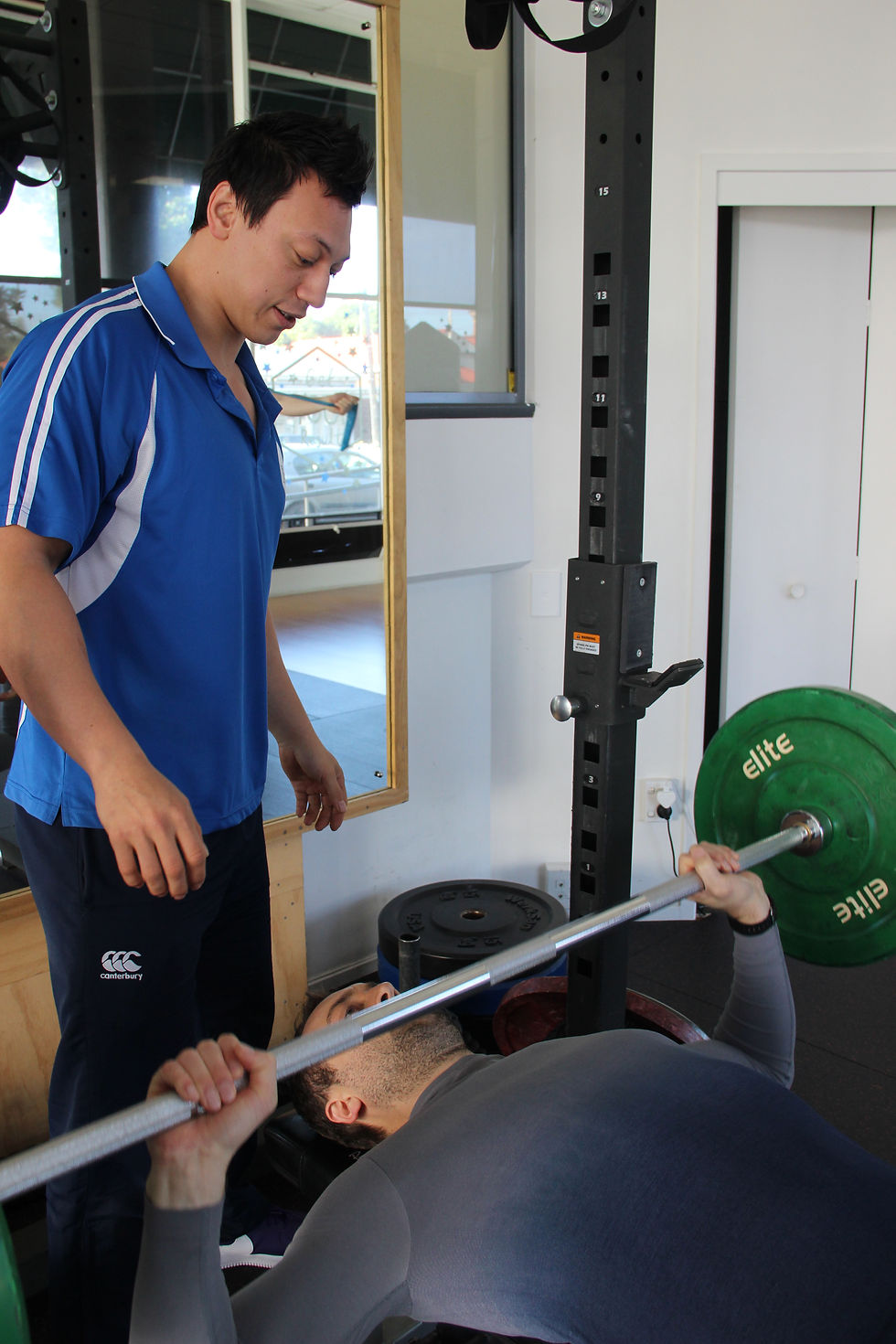
At The Active Lifestyle, we always ask you how you are feeling, what’s going on in your day, and try to learn about you so that your session can be adjusted as necessary. Our goal is to always make sure that you leave your session feeling better than when you walked in. Activity trackers and tech can be a hugely useful tool to guide you, but shouldn’t run your life.
If you want to learn a little bit more about our personal training sessions (and why they are 30 minutes) check out this article - https://www.theactivelifestyle.co.nz/post/30-minute-personal-training-the-most-efficacious-solution
References
ACSM (American College of Sports Medicine) – The Future of Fitness: ACSM Announces Top Trends for 2026 (Wearable Technology ranked #1; notes “nearly half of U.S. adults now own a fitness tracker or smartwatch”). Lancet Public Health – Ding D, et al. Daily steps and health outcomes in adults: a systematic review and dose-response meta-analysis. PMID: 40713949 Reuters – Fitness trackers’ accuracy varies widely for calories burned (Oct 18, 2018).
Reuters – Activity trackers vary in accuracy (Sep 1, 2015) Reuters – Activity trackers not always great for monitoring exercise heart rate (Apr 10, 2017)
Sensors (Basel) – Robbins R, et al. Accuracy of Three Commercial Wearable Devices for Sleep Tracking in Healthy Adults. PMID: 39460013 JMIR mHealth and uHealth – Fuller D, et al. Reliability and Validity of Commercially Available Wearable Devices for Measuring Steps, Energy Expenditure, and Heart Rate: Systematic Review. PMID: 32897239 npj Digital Medicine – Nelson BW, et al. Guidelines for wrist-worn consumer wearable assessment of heart rate in biobehavioral research. PMID: 32613085


Comments